
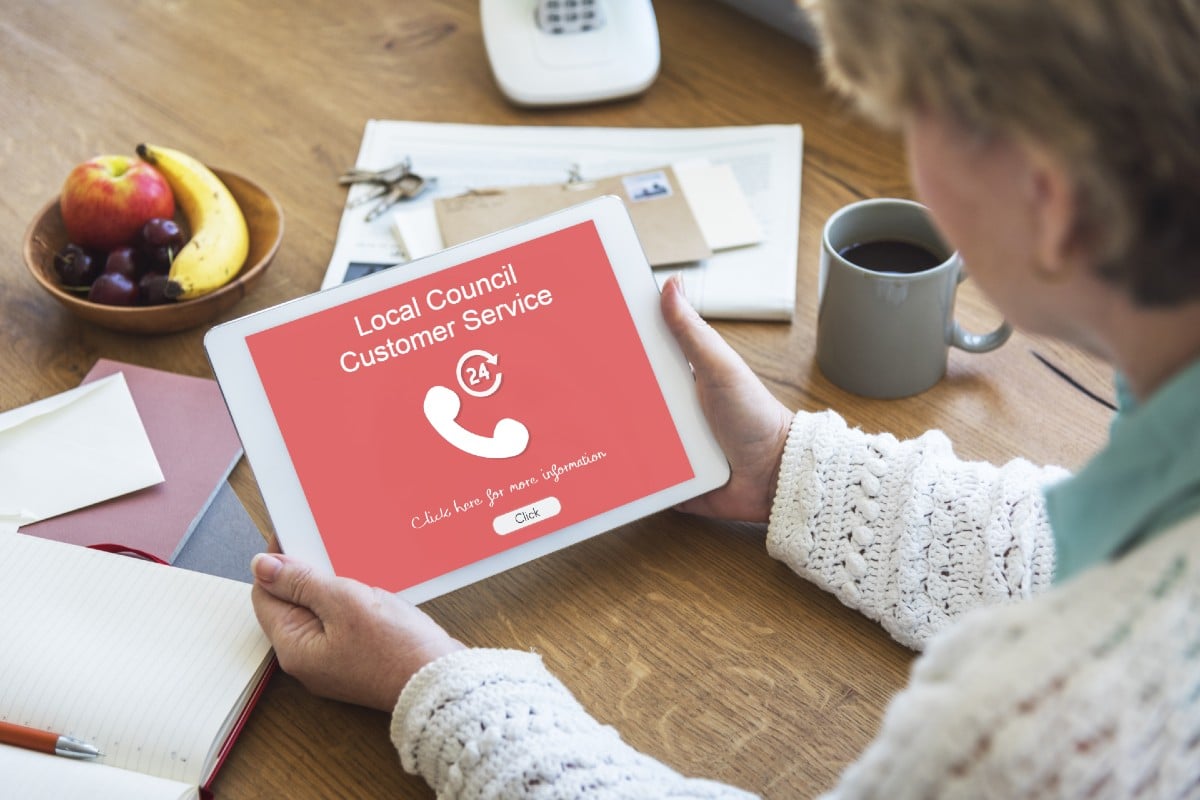
Pressure on local authorities continues to build as demand for services rises and resources remain stretched, increasing the gap between resident expectations and council capacity.
This article considers why UK councils are generally hard to contact, what challenges council contact centres face, and how forward-thinking authorities are adapting to meet demand.
Key Insights (TL;DR)
If you work within a local authority, here are the main points you need to take away:
-
Councils face increasing pressure from housing, social care, waste, and other service demands, yet budgets remain constrained.
-
High enquiry volumes and staff shortages make rapid, consistent responses difficult.
-
Calls received often require escalation, cross-departmental coordination, and follow-up.
- Unresolved issues drive callbacks, escalating staff pressure and extending wait times.
- Housing, council tax, school admissions and severe weather conditions often lead to call spikes that can overwhelm your team.
- Residents expect fast, clear, and accessible communication across multiple channels, on par with private-sector service levels.
- Local authorities are shifting to hybrid customer service models with digital self-service, in-house teams, and outsourced overflow support to handle peak demand.
- Clear processes, well-trained staff, and relaying accurate information boost service quality.
The Scale of the Challenge Facing UK Councils
Local councils sit at the frontline of public services. From housing and social care to waste and education, your teams handle a vast and growing range of enquiries every day.
According to the Local Government Association, councils in England could face a funding gap of £8bn over the coming years, while demand for services continues to rise. At the same time, the National Audit Office has repeatedly highlighted growing pressure on local government finances, particularly in adult social care and housing.
This creates a difficult reality. You are expected to deliver more, with fewer resources, while preserving high service standards.
Why Are UK Councils So Hard to Contact?
Residents often ask this question. The answer is rarely a lack of effort. Instead, it is a combination of structural pressures and operational challenges.
Demand is increasing across nearly every council department:
 Housing Enquiries
Those working in housing services will already understand just how quickly demand can escalate. What was once a steady flow of enquiries has, in many areas, become a surge, driven by a combination of housing shortages, rising private rental costs, and increasing population pressures.
With over 1.3 million households currently on local authority waiting lists in England, the scale of demand is significant. This demand doesn’t sit in the background; it translates directly into constant pressure on your contact centre. Teams are not only handling new applications but also managing ongoing communication with applicants who may be waiting months or years for an outcome.
Key enquiry types:
- New housing applications and eligibility checks
- Updates on waiting list positions
- Rent accounts and arrears
- Emergency and routine repair requests
- Homelessness support and temporary accommodation
 Adult Social Care
If you support adult social care, you are dealing with some of the most sensitive and urgent enquiries in local government.
A House of Commons Library report, ‘The UK’s Changing Population’, shows that 19% of the UK population is aged 65 or over, equating to around 12.7 million people, and this continues to rise. As a result, demand for care services is becoming more complex.
Each contact may represent the start of a significant intervention, whether that’s arranging care, responding to a safeguarding concern, or supporting hospital discharge. This places considerable responsibility on first points of contact, who must balance empathy with accuracy, and urgency with process.
Key enquiry types:
- Requests for care needs assessments
- Safeguarding concerns
- Hospital discharge coordination
- Support for unpaid carers
- Mental health and wellbeing support
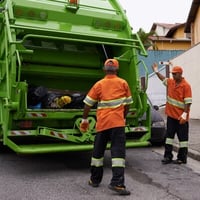 Waste Management
Waste services are among the most visible and immediately impactful services a council provides. When collections run smoothly, they are often taken for granted, but when something goes wrong, residents notice quickly.
This visibility means that even small disruptions can generate significant contact volumes. A single missed collection round, for example, can result in a surge of enquiries within a very short period.
The overall scale of activity is considerable. Data from Keep Britain Tidy shows UK local authorities dealt with 1.15 million fly-tipping incidents between April 2023 and March 2024 meaning they are managing not only routine collections but also reactive and enforcement-related work.
Key enquiry types:
- Missed bin collection reports
- Ad-hoc bulky waste collection requests
- Fly-tipping complaints
- Recycling queries

Environmental Health
Residents contacting environmental health teams often report issues affecting quality of life, such as persistent noise, poor housing conditions, or public health concerns. These issues rarely resolve quickly and often require follow-up, evidence gathering, and coordination with departments or agencies.
This makes demand more complex. A single enquiry may become an ongoing case with multiple interactions. Expectations are difficult to manage, as outcomes are not always immediate or visible to residents.
Key enquiry types:
- Noise complaints, often outside normal hours
- Pest control reports
- Public health risks
- Licensing issues
 Council Tax Enquiries
Council tax enquiries represent one of the most consistent and predictable areas of demand within local government, with steady contact throughout the year. However, this consistency is punctuated by well-defined peaks, particularly around annual billing, instalment reminders, and enforcement activity.
The Ministry of Housing, Communities & Local Government guidance highlights the critical role of council tax collection in local authority funding. This adds a layer of importance to every interaction. Residents contacting the council may be seeking clarification, disputing charges, or, in many cases, dealing with financial pressure or difficulty in meeting payments.
Key enquiry types:
- Payment queries and instalment plans
- Disputes or banding questions
- Discount and exemption requests
- Missed payments and recovery processes
 School Admissions
For those working within school admissions, demand is highly cyclical but intensely concentrated around key points in the academic calendar. During these periods, contact volumes can increase dramatically within a very short timeframe.
The admissions process is complex, involving eligibility criteria, catchment areas, and oversubscription rules that can be difficult for residents to understand. Many enquiries are about clarification and reassurance.
This is further amplified by the emotional significance of the outcome. For families, school placement decisions can feel high-stakes, shaping their children's daily routines and long-term opportunities.
Key enquiry types:
- Application guidance and deadlines
- Safeguarding concerns
- Appeals and waiting list enquiries
- Placement confirmations
- Changes in circumstances
 Adverse Weather Events
Adverse weather events introduce unpredictability that can quickly disrupt normal service delivery and significantly increase demand on contact centres. Unlike planned peaks, these events can develop rapidly, leaving little time to prepare.
Warnings issued by the Met Office, whether for snow, heavy rain, or extreme heat can have immediate and wide-ranging impacts on local services. Roads may become unsafe, waste collections may be delayed, and schools or facilities may close at short notice.
Key enquiry types:
- Flooding and emergency support
- Road conditions and gritting
- Disrupted waste collections
- Temporary accommodation

Service Outages
When digital services go offline, contact centres face immediate spikes in enquiries as residents seek support through traditional channels.
Service outages often trigger a rapid shift in demand from digital channels to traditional contact methods, particularly phone lines. Residents who are unable to complete tasks online will typically seek assistance or report issues, leading to sudden and sometimes sustained increases in contact volumes.
These situations are often unplanned and may coincide with limited information about the cause or resolution time. It can be difficult for staff to provide clear answers, increasing the likelihood of repeat contact.
In this context, the role of the contact centre becomes critical in managing both demand and perception. Providing timely updates, clear guidance, and reassurance can help mitigate frustration even when services are temporarily disrupted.
You may suddenly need to handle:
- Website access issues
- Payment system failures
- Online form or portal downtime
What Challenges Do Council Contact Centres Face?
1. Limited Budgets and Staffing Constraints
Budget reductions have led to smaller teams managing larger workloads.
As a result, you may see:
- Longer wait times
- Increased call abandonment rates
-
Pressure on frontline staff
Recruitment and retention in contact centre roles can also be difficult, particularly if handling complex or highly emotional enquiries.
2. Fragmented Systems and Processes
Many councils operate across multiple legacy systems.
This makes it harder to:
- Access resident information quickly
- Track case progress
-
Provide consistent answers
Without clear processes, the same resident may receive different responses depending on who answers the call.
3. Increasing Citizen Expectations
Residents now expect the same level of service they receive from private sector organisations:
- Fast responses
- Clear communication
-
Multi-channel access
When these expectations are not met, frustration builds quickly.
4. Communication Breakdowns
When call volumes exceed capacity, problems escalate:
- Calls go unanswered
- Voicemails are not returned promptly
-
Residents call back repeatedly
This cycle increases demand as unresolved issues persist.
Related: Missed Phone Calls: Four Ways Businesses Drop the Ball
Real-World Call Examples: Where Pressure Builds
To understand the scale of the issue, it helps to look at real call scenarios. These examples highlight how quickly pressure can escalate and how structured handling can dramatically improve both efficiency and resident experience.
Example 1: Housing Repair Escalation
Initial Call:
A tenant reports a leaking ceiling.
The caller is concerned about potential damage to their home, belongings, and safety. At this stage, they are looking for reassurance as well as defined action.
Challenge:
The call handler logs the issue, but cannot reach the repairs team immediately.
This breakdown typically occurs due to unclear escalation routes or a lack of real-time communication channels with field teams.
Outcome Without Clear Process:
The tenant calls back twice over the next 48 hours, increasing call volume and frustration.
Each repeat call adds pressure to the contact centre, with different agents potentially handling the same case without full context. This duplication not only wastes resources but contributes to rising complaints and reduced service satisfaction.
Improved Approach:
A structured triage call-handling process captures full details, establishes urgency, and triggers immediate escalation to the on-call repair team, with a scheduled progress call to update the tenant.
By introducing clear decision-making frameworks and escalation pathways, call handlers can act with confidence and consistency. Setting expectations and arranging follow-ups reduces the need for repeat contact and reassures the tenant that their issue is being actively managed.
Example 2: Missed Bin Collection
Initial Call:
A resident reports a missed collection.
This type of call can affect entire streets or neighbourhoods. Residents expect a quick, straightforward resolution, as missed collections disrupt daily routines and can lead to additional issues, such as waste buildup and environmental concerns.
Challenge:
Without systems to identify common issues, each contact is handled as a separate case. This makes it harder to coordinate an effective response and leads to inefficiencies in resolving the underlying problem.
Outcome Without Clear Process:
Multiple residents call about the same issue, inundating the contact centre.
This creates a cycle where demand feeds on itself, long wait times prompt more residents to call repeatedly or escalate their concerns. The lack of coordination means the same problem is logged multiple times, consuming valuable resources and delaying resolution for everyone affected.
Improved Approach:
Calls are answered quickly, logged accurately, and grouped into a single service request for the waste team.
With a structured approach, call handlers can quickly identify repeat issues and link them to a single incident or service request. This reduces duplication, improves communication with operational teams, and enables faster, more coordinated responses.
How Forward-Thinking Councils Are Adapting
Despite these challenges, many councils are taking proactive steps to improve service delivery.
1. Digital Transformation
Online portals and self-service tools help reduce call volumes. However, not all residents (especially the elderly) can or want to use digital channels, especially for complex or urgent issues.
2. Hybrid Communication Models
The most effective approach combines:
-
Digital self-service
-
In-house contact teams
-
External support for overflow and out-of-hours calls
This ensures residents always have access to a human response when needed.
3. Outsourced Support for Flexibility
Outsourcing is a way to build cost-saving resilience and scalability into your service model.
Learn more: Local Government Answering Services
With the right partner, you can:
-
Handle peak demand without increasing headcount
-
Maintain consistent service levels
-
Improve response times
Real-World Example: Supporting Resident Demand at Scale
 When resident demand increases, especially outside standard working hours, maintaining service quality becomes a real challenge for local councils. South Derbyshire District Council faced this exact issue during the festive period, when urgent tenant enquiries could not wait.
Answer4u delivered a bespoke triage service, replicating the council’s internal processes using structured call scripts and trained agents. This meant every resident enquiry, from emergency repairs to general queries, was handled consistently and escalated correctly.
The result is a trusted, ongoing partnership that provides:
-
24/7 support for residents, even during peak periods
-
Accurate triage of urgent issues
-
Consistent service aligned with council processes
- A scalable solution that adapts to seasonal demand
Learn more: South Derbyshire District Council Case Study
This example highlights a key point. When demand rises, you need more than extra capacity. You need a partner who can integrate with your processes, protect your service standards, and respond quickly when it matters most.
Answer4u team insight
“What made the start of this project successful was the close alignment between both teams. By working side by side, we translated complex internal processes into clear, structured call handling that our agents could deliver with confidence from day one. That meant every tenant received a consistent, professional response, regardless of when they called.
Today, the relationship continues to evolve. It’s built on open communication, shared goals, and a commitment to improving residents' experience. That ongoing collaboration is what turns a successful project into a long-term, trusted partnership.”Sally-Ann O'Neill - Head of Call Centre Operations
Key Takeaways for Local Authorities
If you are reviewing your current approach, focus on these priorities:
-
Invest in flexible support models to manage peak demand
-
Prioritise first-contact resolution to reduce repeat calls
- Maintain strong processes for consistent communication
-
Balance digital and human channels to meet all resident needs
- Consider outsourcing to extend capacity, strengthen resilience, and maintain service levels
Final Thoughts
Local councils are not struggling due to a lack of commitment. The challenge lies in balancing rising demand, limited resources, and increasing expectations.
By adopting a more flexible, insight-led approach to communication, you can improve service delivery without placing additional strain on your teams.
If your contact centre is under pressure, now is the time to reconsider how calls are managed, supported, and resolved.
About the author


Popular Blog Posts
- What is a Telephone Answering Service?
- What Does a Virtual Receptionist Do?
- What is an Outsourced Call Centre?
- Common Questions about Our 24-Hour Answering Service
- 4 Benefits of using a 24-Hour Virtual Receptionist
- The Importance of Customer Service
- Finding The Best After Hours Call Answering Company
- How After Hours Answering Services Benefit Small Businesses
- How to Handle Difficult Callers
- What is Conditional Call Forwarding?
- The State of IT Outsourcing
- Deliver Better Support with Customer Care Outsourcing

